

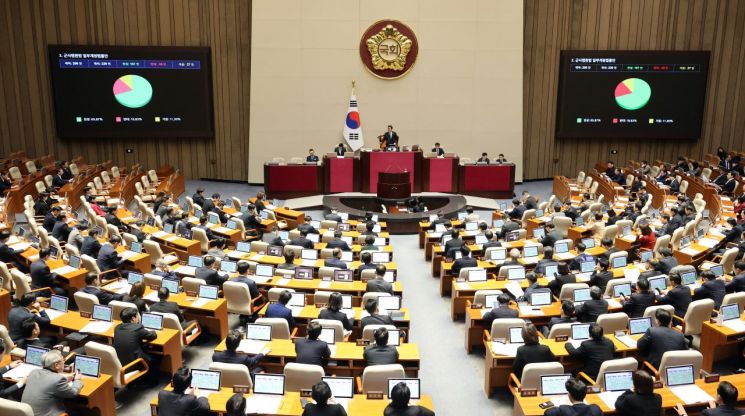
On January 29, 2026, attorney-client privilege in Korea became a formally recognized legal right for the first time. The Korean National Assembly passed a landmark amendment to the Korean Bar Act (변호사법), codifying the right of clients — including foreign nationals — to keep their communications with their lawyers confidential, even in the face of criminal investigations, search-and-seizure operations, and court proceedings.
If you are a foreign individual or company doing business in Korea, this change is significant. Pureum Law Office is here to explain:
What Is Attorney-Client Privilege?
Attorney-client privilege (ACP) is a foundational concept in common law systems like those of the United States, United Kingdom, and Australia. At its core, it means that confidential communications between a client and their lawyer, made for the purpose of obtaining legal advice, cannot be compelled to be disclosed to investigators, prosecutors, or courts.
Until 2026, Korean law had no equivalent right. Lawyers were bound by a professional duty of confidentiality under the existing Bar Act, but this was treated purely as an ethical obligation on the attorney — not as a right the client could actively invoke to block a search, resist seizure of documents, or exclude evidence.
In practice, this meant that law enforcement could — and did — seize emails, internal memos, and legal opinions exchanged between companies and their lawyers, treating them as fair game in criminal investigations. Korean companies suffered a demonstrable disadvantage in international litigation precisely because Korean law lacked this protection, while their counterparts in the US or EU were fully shielded.
That gap is now closed.
The 2026 Korean Bar Act Amendment: What Changed
The amendment inserts a new Article 26-2 into the Korean Bar Act (변호사법 제26조의2), formally establishing attorney-client privilege as a legal right — not merely an ethical duty.
Under the new provision, both attorneys and clients (including prospective clients) may refuse to disclose:
- Confidential communications between attorney and client made for the purpose of obtaining or providing legal advice; and
- Documents and materials prepared by a lawyer in connection with litigation, criminal investigation, or regulatory inquiry — including electronically stored information.
This is a structural shift. Where previously the only tool available at a search scene was to argue the attorney’s ethical obligations, defense counsel can now assert a formal legal privilege on the spot and demand that privileged materials be excluded from the outset of any forensic review.
For a practical comparison of before and after:
| Area | Before the Amendment | After the Amendment |
|---|---|---|
| Search & seizure | Could argue ethical duty; no firm legal basis to block | Can assert ACP privilege immediately on-site and refuse disclosure |
| Digital forensics | Attorney emails/memos seized if matching search keywords | Can request exclusion of privileged materials at extraction stage |
| Court evidence | Privilege raised only by challenging the substance of evidence | Can challenge admissibility outright as illegally obtained evidence |
| In-house counsel | Treated the same as any other employee | Can argue ACP protection for independent legal advice functions |
Important Exceptions to Attorney-Client Privilege in Korea
The new right is not absolute. Under Article 26-2(3), privilege does not apply in the following circumstances:
- Client consent — the client voluntarily waives confidentiality.
- Crime-fraud exception — the attorney-client communications were themselves used, or intended to be used, to facilitate a crime or illegal act, or where the attorney is complicit in the client’s wrongdoing.
- Attorney self-defense — the attorney needs to disclose information to protect their own rights in a dispute with the client (e.g., fee disputes).
- Specific statutory override — another law expressly provides for disclosure.
The crime-fraud exception is particularly important for criminal defense contexts. If investigators can show that the communications were not made to obtain legitimate legal advice but were themselves instruments of wrongdoing, the privilege will not attach. This mirrors the standard applied in most common law jurisdictions.
What This Means for Foreign Nationals and Companies in Korea
For foreign individuals facing criminal investigation in Korea — including those charged with drug offenses, business fraud, immigration violations, or customs matters — attorney-client privilege in Korea now provides a meaningful shield that previously did not exist.
Practically speaking, this means:
- Every communication you have with your Korean defense attorney is protected. Investigators cannot compel your lawyer to disclose what you told them, and cannot seize the legal advice memoranda your lawyer prepared for your case.
- You can speak freely. One of the most practical effects of ACP is that clients can give their lawyers the full picture without fear that the attorney’s notes or emails will be handed to prosecutors. Good legal defense depends on honest disclosure — and ACP makes that possible.
- Documents prepared for your defense are off-limits. Strategy memos, evidence analyses, and case notes your attorney prepares are now presumptively privileged.
For foreign companies with Korea operations, the implications extend to compliance functions, internal investigations, and regulatory responses. Legal teams should begin establishing document management protocols that clearly mark attorney-client communications as privileged — both to assert the right in real time during any future search, and to build a documented record that ACP applies.
Timing: When Does the New Law Take Effect?
The amendment must still pass a cabinet resolution (국무회의) and receive presidential promulgation. The law will take effect one year after official publication. Implementing regulations (시행령, 시행규칙) are currently being drafted; the detailed application standards will be set out in those secondary instruments.
In the meantime, the formal existence of the right — and the expectation that it will be enforceable shortly — is already relevant. Organizations and individuals currently under investigation or facing compliance risk should act now to document their legal communications appropriately.
How Pureum Law Office Can Help
The Legal Experts at Pureum Law Office have extensive experience advising foreign individuals and companies on Korean criminal defense, regulatory compliance, and corporate legal matters. We were closely watching the development of the attorney-client privilege amendment and are fully prepared to advise clients on how to structure their legal relationships and document their communications to take maximum advantage of the new protections.
Whether you are an individual facing a criminal investigation, a foreign company operating in Korea, or an in-house team looking to update your compliance protocols in light of the new law, we can help.
Contact Us for a confidential consultation on how attorney-client privilege in Korea affects your situation.
Frequently Asked Questions
Does attorney-client privilege in Korea protect communications with foreign lawyers? The new Article 26-2 applies to attorneys licensed under the Korean Bar Act. Communications with foreign counsel not admitted in Korea may not fall squarely within the provision; this is an area where implementing regulations will provide further clarity.
Is the privilege automatic, or do I need to assert it? You must actively assert the privilege — it does not protect communications automatically. This is another reason why working with experienced Korean defense counsel from the outset is essential.
Does ACP protect communications made before the law took effect? This is an open question that will likely be addressed in implementing regulations and early case law. Retroactive application is not guaranteed.
What should companies do right now? Begin labeling all attorney-client communications clearly, segregate legal files from general business files, and consult with external criminal defense counsel to review your current exposure and document management practices.
This article is for general informational purposes only and does not constitute legal advice. For advice specific to your situation, please contact Pureum Law Office directly.
Sources: Korean National Assembly, Bar Act Amendment (January 29, 2026); Korean Bar Association; OECD Legal Frameworks Comparative Study
ATTORNEY | Founding Partner
Leveraging his vast experience and comprehensive knowledge, Simon has become an invaluable resource for foreigners facing a wide array of legal issues in Korea.