Immigration & Nationality Law
Get essential insights on Korean immigration law, including visas, residency, work permits, and naturalization. Stay updated with expert advice and tips to navigate the immigration process in South Korea effectively.
Korea Immigration Policy 2026
Korea Immigration Policy 2026 expands the Top-Tier Visa and introduces broader visa reforms for foreign professionals and employers in South Korea. Simon Lee explains the new…

F-2-99 Visa Korea
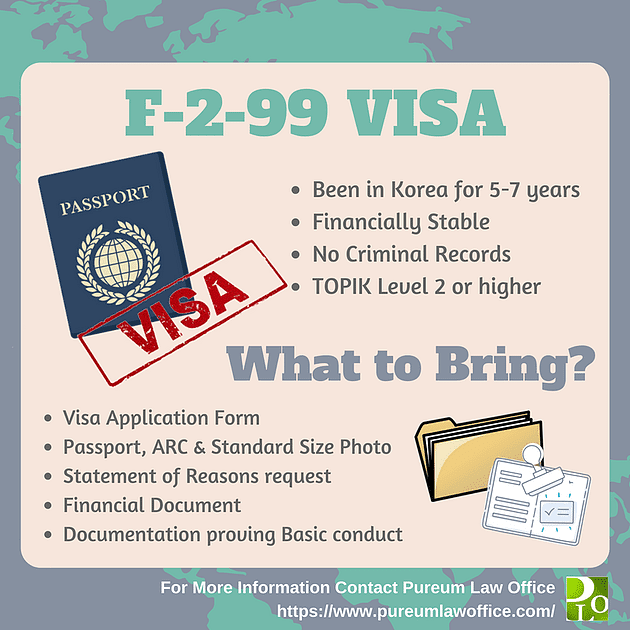
The F-2-99 visa offers a solution for those who have lived in Korea for more than 5-7 years. This visa is available to individuals who meet…

D-8 Visa Korea: Requirements & Application Guide (2026)
D-8 Visa in Korea is the primary pathway for foreign entrepreneurs establishing a business in South Korea. This guide covers the essential steps for investment, incorporation,…

F-2-7 Korean Visa
F-2-7 Korean Visa Pureum Law Office (PLO) helps foreigners obtain a sub-type of the F-2 Korean visa, the F-2-7, which is also known as the long-term…
F-6 Visa after Divorce in Korea
Learn how to maintain or extend your F-6 visa following a divorce in Korea, with detailed insights on child custody, visitation, alimony, and official Seoul Family…

Been at Least 5 Years in Korea Legally?
A guide to South Korea's F-2-99 long-term residency visa for expats with five consecutive years of legal residence, outlining essential requirements—including financial stability, no criminal record,…

Digital Nomad Visa Korea 2026
Remote workers can now stay and travel in South Korea for up to two years on a Digital Nomad Visa.

Renounce Korean Citizenship: Meeting “Actual Center of Life” Standard
Dual nationals born abroad wanting to renounce Korean citizenship must meet specific statutory requirements, notably the "Foreign Address" provision.
Birth Tourism South Korea
Birth Tourism South Korea: Regulations deny dual citizenship to those who give birth abroad to secure foreign passports, requiring complete renunciation of one nationality.