
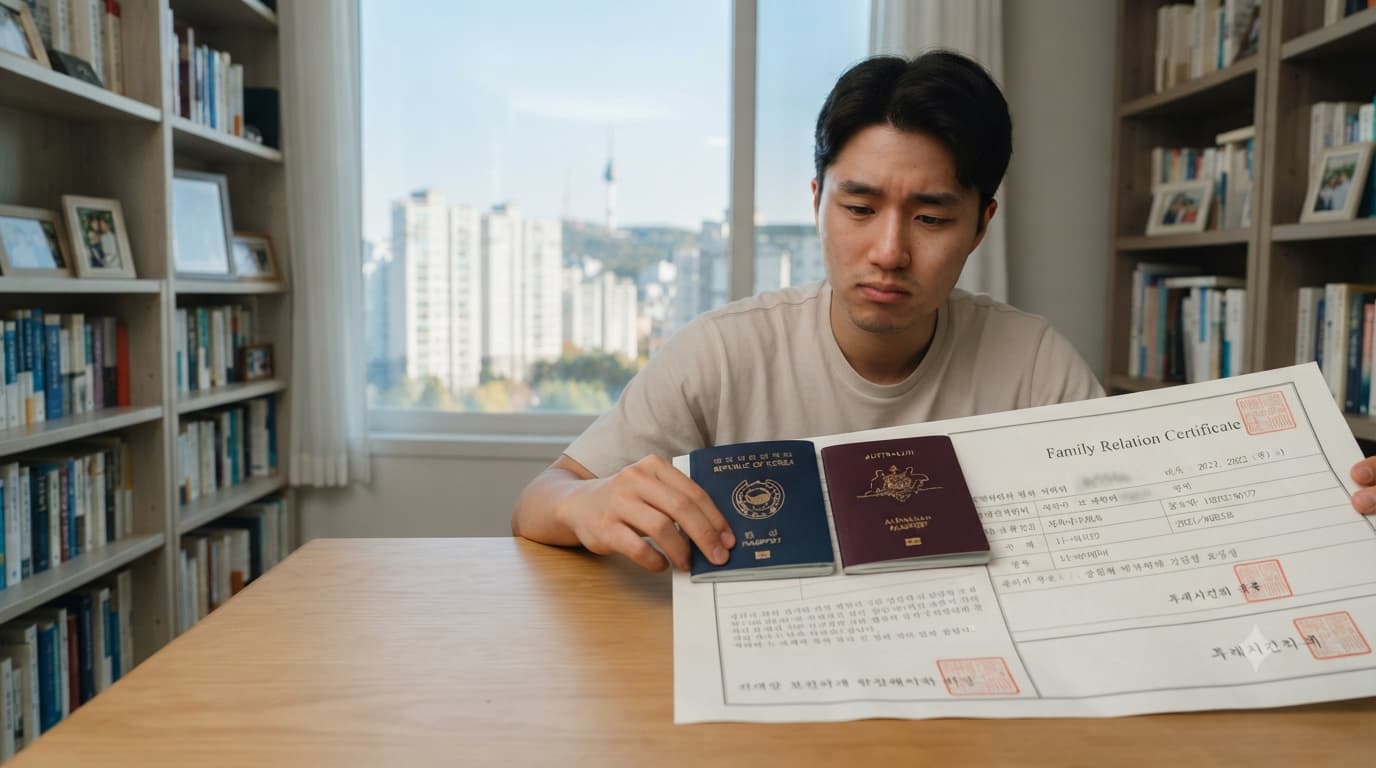
Citizenship Loss: How Children Born & Raised in Korea Can be Considered Foreigners
For many international families living in South Korea, citizenship has always seemed straightforward. A child born in Korea to a Korean parent grows up attending Korean schools, speaking Korean, and living as a Korean citizen. Some children also hold a foreign passport through their other parent.
But what happens when that child discovers that they may have lost Korean citizenship years ago—without anyone realizing it?
A September 2026 report by Channel News Asia (CNA), updated in October, highlighted families facing precisely this situation. Their experiences reveal an important distinction under Korean nationality law: having two nationalities from birth is not necessarily the same as acquiring a second nationality after birth.
For international families, understanding this distinction can be essential to protecting a child’s legal status and future in Korea.
Korean Citizenship Loss Under Article 15 of the Nationality Act
Under Article 15(1) of South Korea’s Nationality Act, a Korean national who voluntarily acquires a foreign nationality generally loses Korean nationality at the time of that acquisition.
This rule can create unexpected consequences for children in international families.
For example, consider a child born in South Korea to a Korean father and a foreign mother. The child acquires Korean nationality through the Korean parent.
Later, the parents register the child with the mother’s home country or complete an application for that country’s citizenship.
Depending on the foreign country’s nationality laws and the legal effect of the application, the child may be treated as having acquired foreign nationality after birth.
If that acquisition falls within Article 15(1), the child may have lost Korean nationality even though the family never intended to give it up.
The key question is not simply whether the child possesses two passports. It is how and when each nationality was legally acquired.
Korean Citizenship Loss vs. Dual Nationality From Birth
Korean nationality law distinguishes between individuals who acquire multiple nationalities at birth and Korean nationals who subsequently acquire a foreign nationality.
A child who automatically acquires Korean and foreign nationalities at birth may be recognized as a multiple national, subject to applicable nationality selection requirements and other legal obligations.
By contrast, a child who acquires foreign nationality through a later voluntary acquisition process may face Korean citizenship loss under Article 15.
Importantly, registering a birth with a foreign embassy does not automatically mean that Korean nationality has been lost. The legal consequences depend on the foreign country’s law, whether nationality existed from birth, and whether the registration created or merely confirmed nationality.
This distinction requires careful examination of the relevant documents and legal framework.
Real Cases of Korean Citizenship Loss Among International Families
The CNA report described several families whose experiences demonstrate how serious the consequences can be.
One 21-year-old man in Suwon was born and raised in South Korea and had fulfilled his military service obligations. His parents had registered him for Russian nationality when he was two years old.
Despite having lived his entire life as Korean, he subsequently faced uncertainty about whether he remained a Korean citizen.
In another case, a Korean father in Busan and his Australian wife believed their two Korea-born children were dual nationals. The children used Australian passports when entering Australia and Korean passports when returning to South Korea.
However, after the father contacted immigration authorities in 2023, the family was reportedly informed that the children had lost Korean nationality.
According to the report, the children received departure orders, and the family faced demands to repay approximately KRW 15 million in childcare subsidies and health insurance benefits.
The mother and children left South Korea and later returned using Australian passports to begin the process of addressing the children’s nationality status.
These examples illustrate that Korean citizenship loss can affect much more than the right to hold a passport.
It can raise questions about immigration status, employment, access to public benefits, residence rights, and a family’s ability to remain together in Korea.
Why Korean Citizenship Loss Can Go Undetected for Years
One of the most concerning aspects of these cases is that families may not realize there is a nationality issue until many years after the relevant event.
A child may continue attending school, obtaining official documents, and using a Korean passport without knowing that Korean nationality may already have been lost by operation of law.
The CNA report also described parents who said they received conflicting guidance from government offices regarding their children’s nationality.
This creates a particularly difficult situation for families who acted in good faith and believed they were following the correct procedures.
However, the issuance of Korean identification documents or the previous use of a Korean passport does not necessarily resolve the underlying nationality question.
Where Article 15 applies, nationality loss may occur as a matter of law rather than only when an administrative authority formally identifies it.
Warning Signs of Potential Korean Citizenship Loss
International families should consider reviewing their children’s nationality status if:
- A child was born in Korea to one Korean parent and one foreign parent.
- The foreign parent’s nationality was obtained through an application, registration, or confirmation procedure after the child’s birth.
- The child holds both Korean and foreign passports, but the family has never confirmed the legal basis for each nationality.
- A foreign nationality certificate shows an acquisition date later than the child’s date of birth.
- Government agencies have provided inconsistent explanations regarding the child’s nationality.
These circumstances do not automatically establish nationality loss. They indicate that a closer legal review may be appropriate.
Korean Citizenship Loss and Proposed Changes to the Nationality Act
The issue has attracted increasing attention from lawmakers and legal professionals.
According to CNA’s 2026 reporting, South Korea’s Ministry of Justice was pursuing amendments intended to protect certain children of international marriages who acquire a foreign parent’s nationality through procedures completed after birth.
The proposed changes were intended to bring qualifying children closer to the legal position of individuals who hold multiple nationalities from birth.
The ministry was also considering measures for individuals who had already lost Korean nationality, including a potential route to recovering nationality while retaining multiple nationalities under specified conditions.
However, an important distinction remains between restoring nationality and recognizing that nationality should never have been lost.
For families whose children have spent their entire lives in Korea, this difference may have significant practical and personal consequences.
As of the CNA report, these measures were proposals under consideration, not confirmed enacted protections. Families should verify the current statutory provisions, transitional rules, and implementation requirements before relying on any proposed reform.
What Should Families Do If Korean Citizenship Loss Is Suspected?
If you believe your child may have acquired a foreign nationality after birth, it is important not to assume that the existence of Korean documents guarantees continued Korean citizenship.
A structured legal review may involve:
1. Confirming nationality at birth
Determine which nationalities the child acquired automatically under the laws of the relevant countries.
2. Reviewing foreign nationality procedures
Examine applications, embassy registrations, nationality certificates, and other documents to establish whether foreign nationality was acquired at birth or subsequently.
3. Determining the relevant acquisition date
The date and legal basis of foreign nationality acquisition may be central to the application of Article 15.
4. Assessing the child’s present legal status
Consider the possible consequences for Korean nationality, immigration status, residence, and previously issued official documents.
5. Evaluating available legal procedures
Depending on the circumstances and applicable law, potential options may include seeking an official determination of nationality status, exploring nationality recovery, or reviewing other lawful residence arrangements.
Families should obtain individualized legal advice before taking steps that could affect their child’s immigration or nationality position.
Korean Citizenship Loss FAQs
Why can a child born and raised in Korea suddenly lose their Korean citizenship?
Under Article 15(1) of South Korea’s Nationality Act, a Korean national who voluntarily acquires a foreign nationality after birth automatically loses Korean citizenship at the time of that acquisition. Even if a child was born in Korea to a Korean parent, registering them for a foreign parent’s nationality later can trigger automatic citizenship loss if foreign law treats that registration as acquiring—rather than simply confirming—nationality.
What is the difference between holding dual nationality from birth and acquiring a foreign nationality later?
Children who automatically acquire both Korean and foreign nationalities at birth are recognized as multiple nationals under Korean law, subject to standard nationality selection rules. However, if a child only holds Korean nationality at birth and obtains a foreign parent’s citizenship through a subsequent application or registration process, Korean authorities may view it as a voluntary post-birth acquisition that forfeits their Korean citizenship.
If my child already has a valid Korean passport and ID, does that guarantee they are still a Korean citizen?
No. Under Article 15, Korean citizenship loss happens automatically as a matter of law at the moment the foreign nationality is acquired, not when a government agency discovers it. A child can continue attending Korean schools, holding Korean identification, and using a Korean passport for years before authorities flag the discrepancy—which can later lead to departure orders or demands to repay public benefits.
What are the warning signs that my child might be at risk of Korean citizenship loss?
You should consider a legal review if your child was born in Korea to one Korean and one foreign parent and:
- The foreign nationality was obtained through an application, registration, or confirmation process after birth.
- The child’s foreign nationality certificate lists an acquisition date later than their date of birth.
- Your family has never confirmed the exact legal basis for both passports, or government offices have given you conflicting information about your child’s status.
What should we do if we suspect our child lost Korean citizenship?
Avoid assuming your child’s current Korean documents protect their status, and seek individualized legal advice before contacting immigration authorities. A proper review involves confirming which nationalities were acquired automatically at birth, examining foreign embassy registrations and certificates to verify the exact acquisition date and legal effect, and evaluating options such as an official nationality determination or nationality recovery procedures.
How Pureum Law Office Can Help With Korean Citizenship Loss
Nationality questions involving international families often require analysis of both Korean law and foreign nationality law.
The answer may depend on details that initially appear minor: the wording of a foreign nationality certificate, the date of an embassy registration, or whether a parent’s application created citizenship rather than simply documenting an existing nationality.
At Pureum Law Office, we understand how deeply nationality issues can affect families who have built their lives in Korea.
Our team can help clients review their circumstances, identify the relevant legal questions, and consider appropriate next steps under Korean law.

If you are concerned about Korean citizenship loss, or are uncertain whether your child legally holds both Korean and foreign nationalities, contact Pureum Law Office.
Your family’s legal status deserves careful attention and clear guidance.
Let us help.
*Disclaimer: This article provides general legal information and does not constitute legal advice.
ATTORNEY | Founding Partner
Leveraging his vast experience and comprehensive knowledge, Simon has become an invaluable resource for foreigners facing a wide array of legal issues in Korea.